Rumors don’t just circulate—they metastasize. When whispers spread that Billie Eilish and her brother Finneas O’Connell were no longer on speaking terms, fans didn’t just notice. They panicked. For over a decade, the pair have been inseparable: co-creators, co-conspirators, and the backbone of one of pop music’s most intimate creative partnerships. So when cryptic social media posts and sudden tour absences sparked online speculation, the silence only made it worse.
Now, Billie has spoken. And what she said cuts through the noise with emotional clarity: there was no falling-out. No feud. No severed ties. Just the messy, private reality of two high-profile siblings navigating fame, burnout, and boundaries—under the relentless glare of the internet.
This isn’t just damage control. It’s a correction of narrative—one that reflects how quickly misinformation spreads when fame and family collide.
The Rumors That Wouldn’t Die
It started with a gap. Billie stepped away from public appearances in early 2024, citing health and mental well-being. During that time, Finneas continued with his own projects, including solo music and production work for other artists. Their social media activity diverged—no joint posts, no tagged studio sessions, no playful sibling banter. To fans, it looked like a break.
Then came the fuel. A misinterpreted quote from an old interview resurfaced, where Finneas mentioned “needing space” in creative relationships. A blurry photo of Billie looking tense at an event was captioned “Avoiding her brother?” by a gossip outlet. TikTok theories multiplied: Was there tension over royalties? Creative differences? Did Finneas’ solo career threaten their dynamic?
The speculation peaked when Billie skipped Finneas’ solo show in Los Angeles—despite having attended nearly every major milestone in his career. To longtime followers, it felt symbolic. A crack in the foundation.
But absence isn’t evidence. And silence isn’t confirmation.
Billie’s Response: A Personal, Unfiltered Rebuttal
Billie didn’t respond with a PR statement. She didn’t deploy legal threats. Instead, during an intimate fan Q&A at a London event, she addressed the rumors head-on.
“I’ve seen the stuff people are saying,” she said, voice steady but visibly frustrated. “That my brother and I aren’t talking? That we’re ‘done’? That’s not just wrong—it’s kind of sick. Finneas is my person. Always has been.”
She went further, emphasizing that their bond wasn’t just emotional—it was essential to her survival in the industry. “We’ve argued, sure. We’ve had moments where we needed breaks. But that’s what family does. We don’t need to be glued at the hip 24/7 for people to respect that we love each other.”
The room erupted. Fans live-posted her words, and within hours, #BillieAndFinneas trended globally. But more than the viral moment, her response underscored a deeper issue: the public’s hunger for drama where none exists.
Why the Rumors Gained Traction
Let’s be honest: the idea of Billie and Finneas splitting up makes for a compelling story. Their partnership has been mythologized. They wrote Ocean Eyes in Finneas’ bedroom. They won Oscars, Grammys, and global acclaim as a unit. He produces. She performs. They finish each other’s sentences.
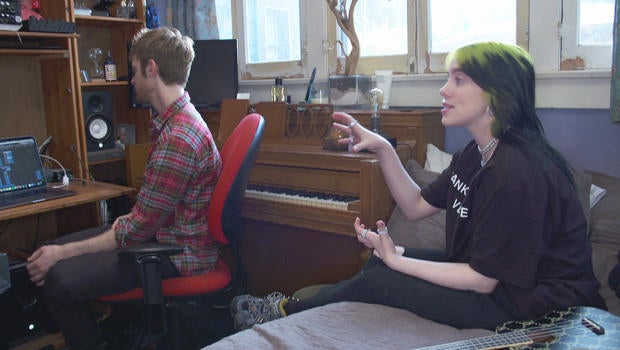
That kind of closeness breeds fascination—and inevitably, skepticism. Audiences are conditioned to expect breakups: band feuds, sibling rivalries, creative implosions. When two people appear too aligned, too harmonious, suspicion creeps in.
Add in Billie’s recent artistic evolution—her shift toward more independent songwriting and performance—and the narrative writes itself: the protégé outgrows the mentor. The star eclipses the collaborator.
But the reality is less cinematic. More human.
Finneas confirmed in a follow-up interview that the rumors “hurt more than I expected.” He admitted they’d had “a few tough conversations” about work-life balance and personal space—nothing unique to their relationship. “We’re not robots,” he said. “We’re two people who’ve spent our entire lives building something together. Of course we need room to breathe sometimes.”
The Real Story: Boundaries, Not Betrayal
What the public mistook for a rift was actually a recalibration.
After years of nonstop touring, recording, and global scrutiny, both Billie and Finneas have prioritized individual growth. Billie has explored solo writing sessions, experimented with new producers, and embraced a more independent stage presence. Finneas has released his own music, stepped into film scoring, and spoken openly about wanting creative autonomy.
None of this signals a breakup. It’s evolution.
Consider this: most long-term creative duos go through phases of separation. The Lennon-McCartney partnership had years of minimal contact. Beyoncé and Jay-Z took public breaks in their marriage while still collaborating artistically. Growth isn’t contradiction—it’s necessity.
Billie herself acknowledged this: “People think if we’re not in the studio every day, something’s wrong. But I’m allowed to write a song alone. He’s allowed to make music without me. That doesn’t mean we’ve failed.”
The Cost of Speculation on Mental Health
One of the most damaging aspects of the rumors wasn’t just their falsehood—it was their timing.
Billie has been transparent about her struggles with depression, anxiety, and body image. She’s spoken about the toll of fame on her mental health. For rumors about her closest relationship to spiral during a period of personal retreat wasn’t just invasive—it was reckless.
Finneas echoed this concern: “When people start saying things like ‘they’re broken,’ it’s not gossip. It affects real people. Billie was healing. I was supporting her. And then suddenly, we’re ‘enemies’ online.”
This highlights a broader issue in celebrity culture: the lack of space for private struggle. The expectation that public figures must be constantly visible, harmonious, and available for interpretation erodes their ability to navigate personal challenges with dignity.
How Fans Can Support—Without Spreading Rumors
Devotion is powerful. But fandom becomes harmful when it morphs into surveillance.
Fans who love Billie and Finneas can honor their bond by resisting sensationalism. That means:
- Questioning sources. Was that “insider” quote cited? Or was it taken out of context?
- Respecting silence. A lack of social media posts doesn’t mean a relationship is failing.
- Avoiding diagnostic language. Calling a relationship “toxic” or “over” based on speculation isn’t analysis—it’s projection.
- Celebrating independence. Supporting Finneas’ solo work doesn’t betray Billie. And vice versa.
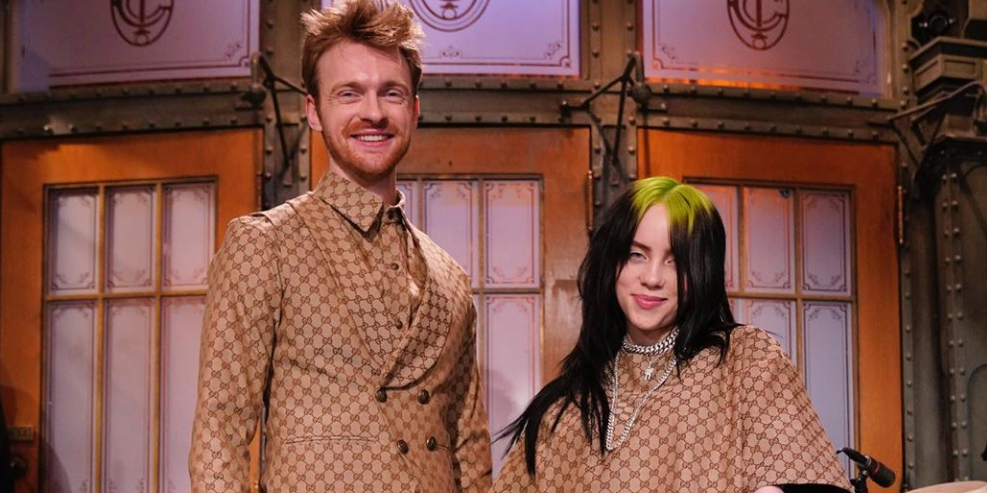
Their partnership has thrived not because it’s perfect, but because it’s adaptable. Fans can mirror that resilience by allowing room for change.
The Future of Their Creative Partnership So, are Billie and Finneas still working together?
Absolutely.
Their upcoming album—set for release later this year—was co-written and produced entirely by the siblings in their home studio. Early tracks have already drawn praise from insiders for their emotional depth and sonic innovation.
More importantly, both have reaffirmed their commitment to collaboration. “We’re not a brand,” Billie said. “We’re family. And family doesn’t get canceled because of a rough patch.”
That’s the core truth the rumors missed: their connection isn’t transactional. It’s foundational.
Even as they explore solo projects, their synergy remains unmatched. They understand each other’s creative instincts, vocal nuances, and emotional thresholds in a way no outsider ever could.
What This Moment Reveals About Fame and Family
The backlash to the fallout rumors wasn’t just about loyalty to Billie and Finneas. It was a collective pushback against the entertainment machine’s hunger for conflict.
In an era where algorithms reward drama, quiet, steady relationships don’t trend. But they endure.
Billie and Finneas’ story isn’t one of collapse. It’s one of endurance. Of two people choosing to grow—not just together, but alongside each other.
They’ve built something rare: a partnership rooted in love, trust, and mutual respect. Not every moment has to be documented. Not every silence needs interpretation.
Sometimes, the strongest statement is simply showing up—again and again, side by side, on your own terms.
Final Thought
Next time you see a rumor about a celebrity relationship imploding, pause. Ask: What’s the evidence? More often than not, the truth is less explosive—and more human—than the headline suggests.
Billie and Finneas aren’t perfect. They’re not immune to stress, disagreement, or the need for space. But they’re still here. Still creating. Still family.
And that’s the only update we need.
FAQ
Did Billie Eilish and Finneas really have a fight? There’s no evidence of a major fight. Both have confirmed they’ve had normal sibling disagreements and needed personal space, but there was no serious falling-out.
Why did Billie miss Finneas’ concert? She was focusing on her health and personal recovery at the time. Her absence wasn’t a snub or sign of tension.
Are Billie and Finneas still making music together? Yes. Their upcoming album was co-written and produced by the two in their home studio, continuing their long-standing collaboration.
Has Finneas’ solo career caused tension? No. Billie has publicly supported his solo work, emphasizing that his success doesn’t threaten their relationship or partnership.
Do Billie and Finneas ever work with other producers? Yes. Billie has experimented with other collaborators, and Finneas produces for other artists. This independence doesn’t replace their bond—it complements it.
How do Billie and Finneas handle public scrutiny? They’ve both criticized the spread of rumors, calling them hurtful and detached from reality. They prioritize privacy and mental well-being over public performance.
What’s the best way fans can support them? By respecting their boundaries, avoiding speculation, and celebrating both their joint and individual work without pitting one against the other.
FAQ
What should you look for in Billie Eilish Breaks Silence on Finneas Fallout Rumors? Focus on relevance, practical value, and how well the solution matches real user intent.
Is Billie Eilish Breaks Silence on Finneas Fallout Rumors suitable for beginners? That depends on the workflow, but a clear step-by-step approach usually makes it easier to start.
How do you compare options around Billie Eilish Breaks Silence on Finneas Fallout Rumors? Compare features, trust signals, limitations, pricing, and ease of implementation.
What mistakes should you avoid? Avoid generic choices, weak validation, and decisions based only on marketing claims.
What is the next best step? Shortlist the most relevant options, validate them quickly, and refine from real-world results.